
Showing posts with label credit crunch. Show all posts
Showing posts with label credit crunch. Show all posts
Friday, 20 November 2009
Guardian guide to freebies
Why waste your hard-earned cash when people are queuing up to give you stuff for nothing, says Huma Qureshi in The Guardian's guide to freebies.


Thursday, 27 August 2009
Still shopping ethically during the recession
A recent poll of Friends of Cafédirect asked them if they were still shopping ethically in the recession. By an overwhelming majority, 77% are still shopping ethically, 21% do sometimes and only 2% have stopped shopping ethically in the downturn.
Friday, 7 August 2009
Economy Gastronomy
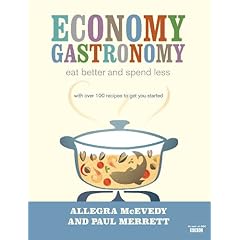 The Guardian has been running a week long series on Economy Gastronomy by Allegra McEvedy and Paul Merrett:
One salmon, four dishes
One chicken, three ways
Turn a pumpkin into a feast
Dinner and a treat: escalope of chicken and treacle tart
Spicy black bean quesadilla and anytime cookiesThis ties in with a new BBC2 show, Economy Gastronomy, and a book, Economy Gastronomy: Eat Better And Spend Less by Allegra McEvedy and Paul Merrett, published by Michael Joseph.
Thursday, 30 July 2009
Job hunting in the recession
Evangelicals Now magazine offers Practical tips on how to find a job after redundancy for Christians, with the following outline:
- Think and pray
- Preparation
- Finding opportunities
- Interviews
- Settling into what's next
- Resources
Monday, 13 July 2009
Comfort-eating through the recession?
 The BBC website reports on how Britain eats its way through recessions: "when the going gets tough, the tough, it seems, tuck into pudding". The report suggests that this may be more than just comfort eating, and that there may be profound implications for the way we understand what happens to the economy (in both good and bad times) and for how it might behave in future.
Thursday, 21 May 2009
How to be Super-Thrifty
 I just read Kath Kelly's book 'How I Lived a Year on Just a Pound a Day'. Mainly because I was curious to find out just what was allowed to be included in the £1, as I'd heard about it on the radio, and couldn't believe that this was possible. The book turned out to be an entertaining and informative read.
The feat - which started as a bit of a dare - seems to have taken place a couple of years ago, so perhaps Ms Kelly managed to avoid some of the food price rises. Rent wasn't included in the £1, but everything else was.... although some of the survival tactics were a little cheeky, like pinching newspapers out of other people's recycling boxes when they were left out on bin-day, to get the coupons to collect tokens for freebies. Other strategies, such as buying reduced price items in the supermarket and picking wild food were rather more familiar.
The author managed not only to survive - AND put on weight - but also to get in a couple of trips away without cheating, which was all very impressive on such a tiny budget. Internet sites that are of use to anyone wishing to live a more frugal - and green - lifestyle are listed at the back of the book, and include Freecycle, organic farm volunteering, and car-sharing sites.
The only snag is that the book itself has a hefty £6.99 price tag..... this seemed to jar with the spirit of the book - so I borrowed it from the local library for just a 25p reservation fee. Ms Kelly would be proud!
Tuesday, 19 May 2009
Tea to increase in price
 Bad news - the cost of a cup of tea is set to rise next month after droughts and the falling pound have increased the price of tea. A combination of factors have driven up auction prices for tea over the past year: the United Kingdom Tea Council reports that droughts in India, Kenya and Sri Lanka have caused crop failures, with production in East Africa falling by 10%. The collapse in sterling has also made tea much more expensive for British importers who buy tea in dollars.
Credit crunch tips from Chelsea
The Chelsea Flower Show opens this week and, in light of the recession, it is turning its attention to credit crunch-busting measures for the garden, featuring ideas from growing plants to make perfume to recycling.
Related posts:
- Get your hands dirty!
- How to be a thrifty gardener
- How green is your garden?
Related posts:
- Get your hands dirty!
- How to be a thrifty gardener
- How green is your garden?
Friday, 15 May 2009
More gourmet budget recipes
Missed some of the Guardian's series on Gourmet eating on a budget? Check out the whole Dinner for under a fiver series for recipes from: Delia Smith, Jamie Oliver, Rose Gray, Sam Clark, and Yotam Ottolenghi.
Monday, 11 May 2009
Gourmet eating on a budget
The Guardian is running a week-long series of "affordable recipes from Britain's top chefs". Today Delia Smith shares her ideas for eating deliciously on the cheap - and offers two exclusive recipes for dinner under £5: Potato, onion and cheese souffle with sage and Spiced rhubarb and ginger brulee .
Sunday, 26 April 2009
Online Bible verses give hope in credit crunch
Words of hope and specially selected Bible verses have been added to the Church of England’s Matter of Life and Debt online initiative to help those suffering from the agony of hopelessness in the current financial situation. Finding hope when struggling with debt complements practical advice and resources for escaping problem debt with simple ways to develop a sense of hope for the future.
The new pages advise website visitors to look beyond the here and now, to count their blessings, and to remember that they are valuable to God, even if they lose the ‘status’ that comes with jobs and money. They will also find encouragement to pray to God about financial worries, with Psalms 42 and 130 offered as words of prayer.
“I wait for the Lord, my soul waits, and in his word I hope” (Psalm 130)
The new pages advise website visitors to look beyond the here and now, to count their blessings, and to remember that they are valuable to God, even if they lose the ‘status’ that comes with jobs and money. They will also find encouragement to pray to God about financial worries, with Psalms 42 and 130 offered as words of prayer.
“I wait for the Lord, my soul waits, and in his word I hope” (Psalm 130)
Friday, 20 March 2009
Economic lessons from the Wizard of Oz?
A story on the BBC website claims that the story, The Wonderful Wizard of Oz, is used as an economic parable. It is one of the world's best-loved fairytales, and the 1939 film is the most famous evocation of the story. However, the story has underlying economic and political references that make it a popular tool for teaching university and high school students - mainly in the United States but also in the UK - about the economic depression of the late 19th Century. But not everyone believes The Wonderful Wizard of Oz includes any hidden meanings - and it is unlikely any young fans will think about deflation and monetary policy when they view it.
Wednesday, 4 March 2009
Credit crunch pizzas
 Apparently, "in our hour of financial need, we're all heading for cheap and cheerful high-street pizzerias" . Matthew Fort of the Guardian reviews the leading pizza chains - and doesn't find anything very authentic.
If you want to do a taste test yourself, the MoneySavingExpert website has links to vouchers for:
Friday, 27 February 2009
Borrow books and save money
Did you take advantage of the Library Free Day last weekend? Here's another credit-crunch offer: just borrow 6 books on your ticket and save money with a free loan of any CD, DVD or talking book. This seasonal special offer is available in all Leicestershire libraries from 23 February until 6 March.
Sunday, 22 February 2009
A credit crunch text from the Bible
Have you listened to "What Is the Recession For?" yet? In it John Piper suggests that 2 Corinthians 8:12 might be the clearest "recession text" in the Bible, as it describes the roots of the joy of the Macedonian believers in their "recession".
In their "severe test of affliction" and "extreme poverty" their abundant joy "overflowed in a wealth of generosity". Their generosity didn't come from prosperity but from God's grace - and this grace rooted in "our Lord Jesus Christ, that though he was rich, yet for your sake he became poor, so that you by his poverty might become rich" (2 Corinthians 8:9).
In their "severe test of affliction" and "extreme poverty" their abundant joy "overflowed in a wealth of generosity". Their generosity didn't come from prosperity but from God's grace - and this grace rooted in "our Lord Jesus Christ, that though he was rich, yet for your sake he became poor, so that you by his poverty might become rich" (2 Corinthians 8:9).
Sunday, 15 February 2009
What is the recession for?
Have you heard a sermon preached on the recession yet? If not, listen to "What Is the Recession For?" for a reminder that God is sovereign over all finances and when the economy plummets, God has His purposes.
Some of His purposes made known in the Bible include: "waking us up to the constant and desperate condition of the developing world where there is always and only recession of the worst kind; and relocating the roots of our joy in His grace rather than in our goods - in His mercy rather than our money, in His worth rather than our wealth".
Some of His purposes made known in the Bible include: "waking us up to the constant and desperate condition of the developing world where there is always and only recession of the worst kind; and relocating the roots of our joy in His grace rather than in our goods - in His mercy rather than our money, in His worth rather than our wealth".
Friday, 13 February 2009
Ethical foods backed despite downturn
A recent poll has discovered that consumers are buying more Fairtrade and locally produced products despite the tough economic climate. In addition to locally-produced and Fairtrade foods, shoppers are concerned to purchase goods with higher animal welfare standards. Only organic foods have suffered a decline, food and grocery researchers IGD found in a poll of 1,051 shoppers conducted in December.
Remember the LOAF principle? It encourages people to choose food that meets at least one of the following criteria: Locally produced, Organically grown, Animal friendly or Fairly traded.
Thursday, 5 February 2009

Saturday, 31 January 2009
Faith, hope and charity shops
Just got to blog about an article with such a great headline! Read Faith, hope and charity shops for a reminder of the benefits of using charity shops. It is extremely ethical:recycling what would otherwise have been discarded; it makes no global, third-world-sweat-shop-exploiting company richer; it releases funds for a range of needy causes. Charity shopping is also thrifty, and it restricts choice and thereby strikes a blow at consumerism.
Thursday, 29 January 2009
Espresso: the ideal beverage for a recession
The espresso is Italy's gift to the world and the ideal stimulant for the creative mind, writes Graham Farmelo in the Times Higher. I learned a number of new facts in this essay on the joys of espresso including the fact that the word "coffee" derives from the ancient Arabic "qahwat", meaning "wine of the bean".
I stand by my conviction that the espresso is, when well prepared, one modern culinary component that is impossible to better. Come to think of it, at around £1.30 a cup, it is probably the cheapest of all uplifting gastronomic treats, making it the ideal beverage for a recession.
Last year, Britons spent about £750 million on coffee, but only a small fraction of this on espressos. Think of the huge amount of money that would be saved if the majority of coffee-bar patrons switched to espressos from cappuccinos. The country's milk bill would fall and its carbon footprint would shrink too. Better yet, millions would appreciate the joy of savouring in a single shot Italy's greatest gift to the modern world.
Subscribe to:
Posts (Atom)


 Posts
Posts